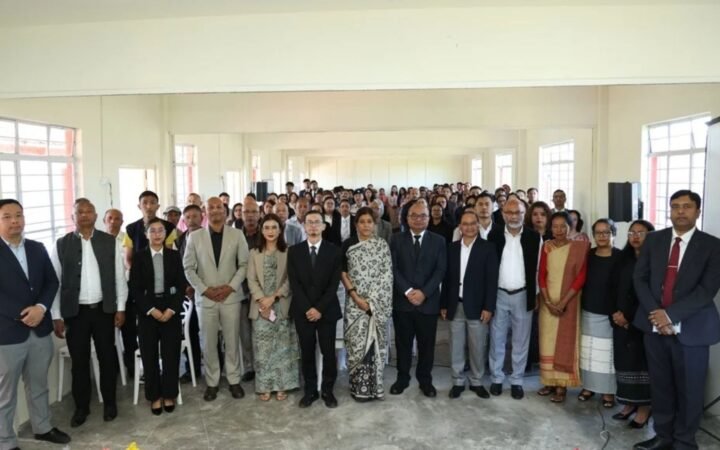
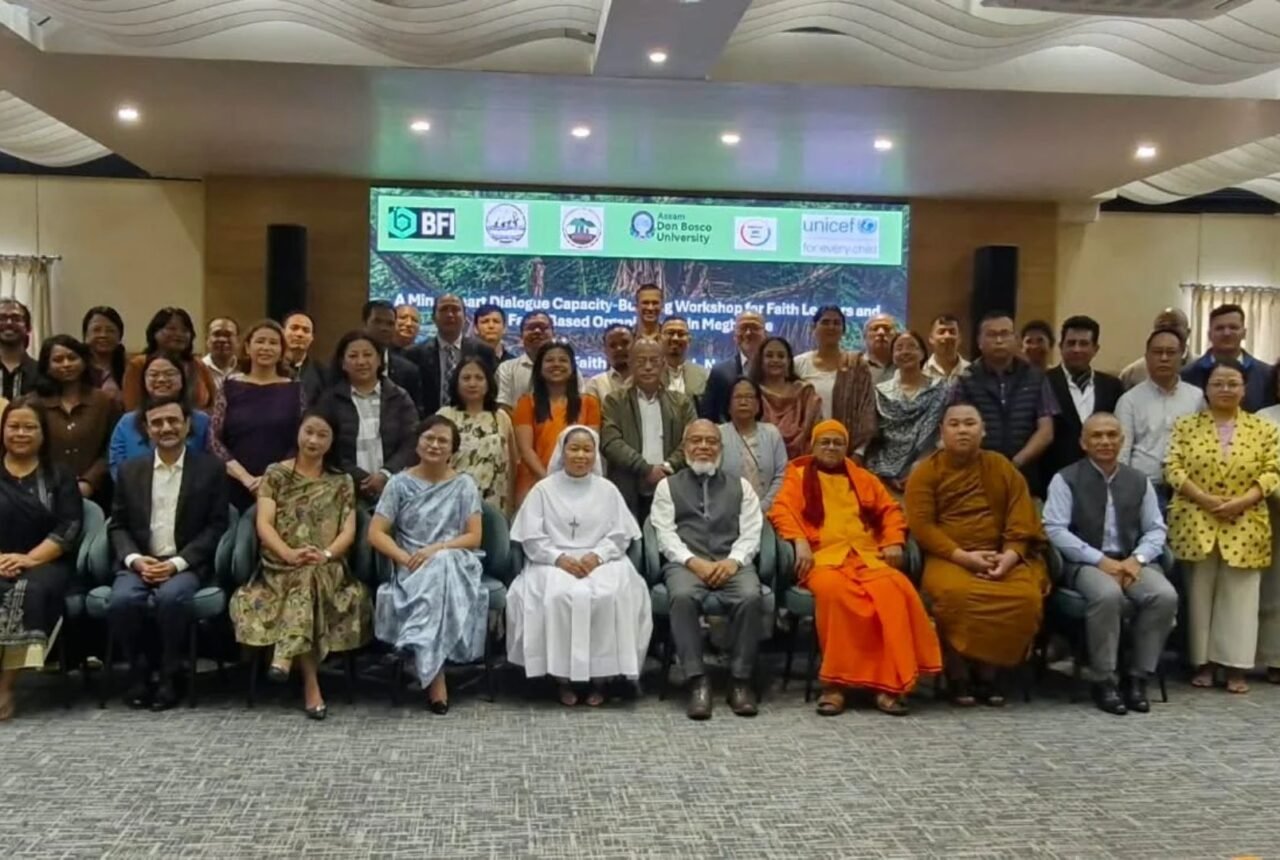
Shillong, October 14: A two-day capacity-building workshop on “Harnessing the Power of Faith for Maternal, Newborn and Child Health” was held on October 13–14 at Taraghar, State Guest House, Shillong, bringing together faith leaders, faith-based organisations, government representatives, frontline health workers and development partners to strengthen community engagement and improve maternal, newborn and child health (MNCH) outcomes across Meghalaya.
The Mind-Heart Dialogue workshop was attended by the Director of Health Services (MCH&FW), state nodal officers for maternal health, child health and immunisation, and representatives of various faith communities. These included the Catholic Archdiocese, KJP Assembly, Sein Reij, Seng Khasi, Sikh Community, Muslim Union, Ramakrishna Mission, Buddhist Association, Unitarian Church, Seventh-day Adventist Church, Garo Baptist Convention, Northeast India Christian Council, Naga Christian Fellowship, Mao Christian Fellowship, Presbyterian Church of India, All Saints Cathedral, Kner Sha-ki Mission Organisation, Church of God and members of the Shillong All Faith Forum (SAFF).
The initiative aims to leverage the influence and trust of faith leaders to encourage positive health-seeking behaviours, strengthen supportive social norms and improve access to essential health services, particularly among remote, underserved and vulnerable communities.
Despite progress in strengthening healthcare services, gaps remain in early pregnancy registration, antenatal care, institutional delivery, postnatal care, exclusive breastfeeding and full immunisation. Human-Centred Design (HCD) consultations conducted across all 12 districts of Meghalaya have highlighted how fear, trust, family influence, social norms, transportation constraints and previous healthcare experiences can influence decisions about seeking medical care.
Building on Meghalaya’s experience with Behavioural Insights for Routine Immunisation (BI for RI), the workshop uses Mind-Heart Dialogue (MHD), an approach that connects verified evidence with faith values, empathy, lived experiences and practical community action. The initiative also builds on collaboration involving UNICEF, Assam Don Bosco University (ADBU) and the Northeast SBC Alliance, alongside broader multi-faith engagement through the Multi-Faith Action Coordination Committee (MFACC).
The workshop aims to strengthen the capacity of faith leaders and faith-based organisations to promote early antenatal care, birth preparedness, institutional delivery, postnatal care, breastfeeding, nutrition and routine immunisation.
Through existing platforms such as congregations, women’s and youth groups, schools and community gatherings, faith leaders are encouraged to address health-related myths respectfully, support informed family decisions and connect vulnerable households with appropriate health services.
The two-day programme included experiential learning, community-barrier mapping, role-play, inclusion exercises and practical action planning. A key expected outcome is the development of institution-specific 90-day action plans identifying priority MNCH behaviours, target audiences, communication platforms, activities, referral pathways and measurable indicators.
Insights from the workshop will inform the development and operationalisation of the HCD-MNCH Roadmap, with the aim of integrating human-centred design approaches into government planning, capacity-building initiatives and Social and Behaviour Change (SBC) mechanisms to strengthen community engagement and improve health outcomes.
The workshop also seeks to strengthen coordination between faith institutions and government health systems, including the National Health Mission (NHM) and the State Health Systems Resource Centre (SHSRC). A proposed Meghalaya Faith and MNCH Community of Practice will support continued coordination, peer learning, documentation and follow-up, with links to the Northeast SBC Alliance and MFACC.
The initiative emphasises collaborative, inclusive and evidence-based action, with faith leaders complementing—not replacing—the clinical roles of healthcare professionals.
By connecting trusted community networks with public health services, Meghalaya aims to strengthen community participation and improve access to timely, quality healthcare for every mother, newborn and child.