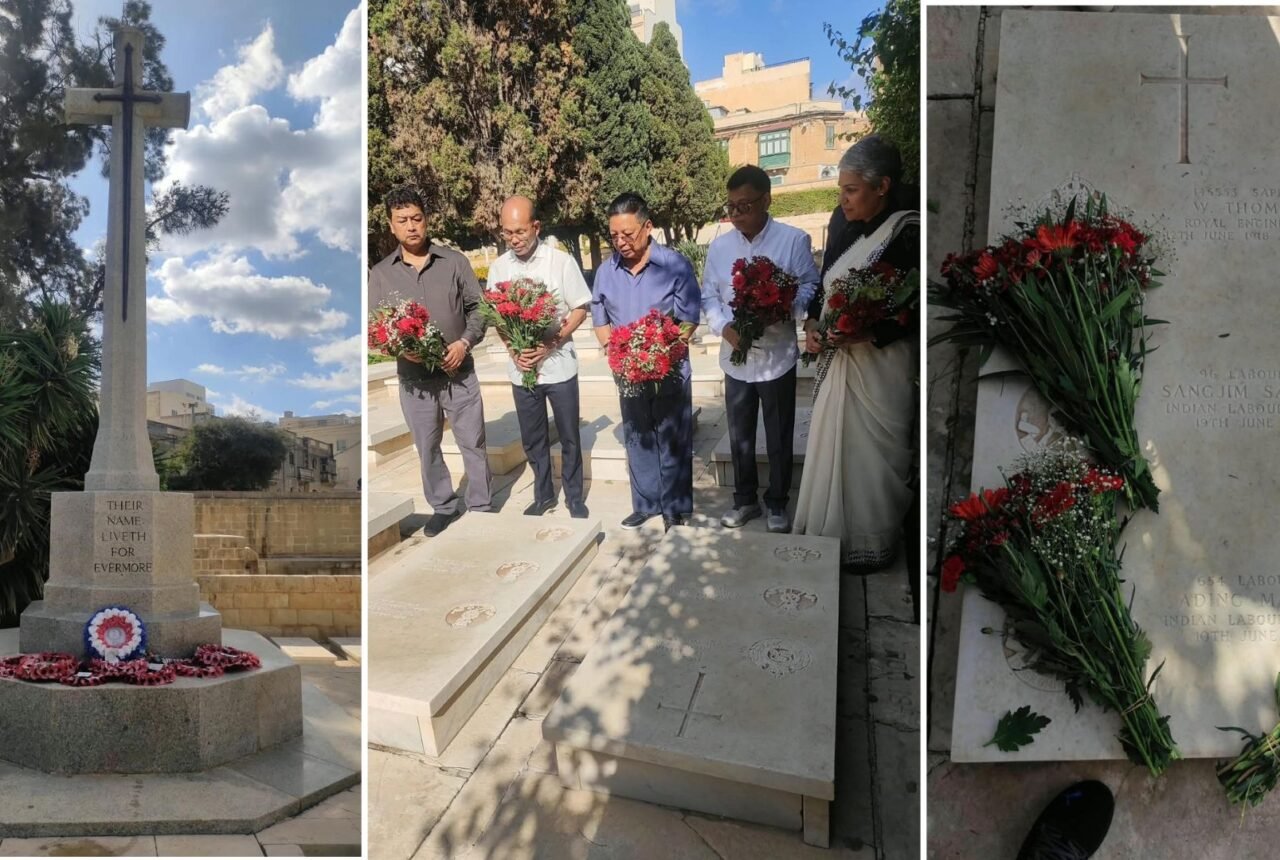
Shillong: A Meghalaya delegation led by Assembly Speaker Thomas A. Sangma has discovered the graves of three additional Garo men who served with the 69th Garo Labour Company during the First World War at the Pieta Military Cemetery in Malta.
The delegation paid homage to four men from Garo Hills buried at the Commonwealth-maintained military cemetery. Until the visit, the grave of Khew Marak, who died on June 15, 1918, was understood to be the only known grave of a Garo member of the 69th Garo Labour Company at the cemetery.
During the visit, the delegation identified the graves of Ading Marak, who died on June 10, 1918; Sangjim Sangma, who died on June 19, 1918; and Join Marak, who also died on June 10, 1918.
The discovery sheds further light on the contribution of men from Garo Hills to the Allied war effort during the First World War. Recruited into the 69th Garo Labour Company, they undertook essential support duties, including road construction and the transportation of supplies.
Speaking on the occasion, Speaker Thomas A. Sangma said the visit was deeply significant for Meghalaya as it brought to light the resting places of Garo men whose contributions and sacrifices had remained largely unknown.
The delegation included Deputy Speaker Limison D. Sangma, Deputy Chief Whip Ronnie V. Lyngdoh and Meghalaya Tourism Development Corporation Chairman Marthon J. Sangma. Meghalaya Legislative Assembly Secretary Malthus S. Sangma and Deputy Secretary Raja Kharpuri also accompanied the delegation.
The Malta visit formed part of the delegation’s post-conference study tour following its participation in the Commonwealth Parliamentary Association Conference in Cape Town, South Africa.
Facilitated by the High Commission of India in Malta, the visit enabled the delegation to pay respects at the graves and document the presence of Garo soldiers and labourers who served overseas during the First World War.
The discovery of the three additional graves marks an important step in preserving and recognising the wartime history of Garo Hills and Meghalaya and its connection to the wider events of the early 20th century.