Shillong: The Food Safety and Standards Authority of India (FSSAI), under the Ministry of Health and Family Welfare, in collaboration with the Commissionerate of Food Safety, Government of Meghalaya, organised the first ‘Eat Sustainable Summit’ in Shillong on November 18 and 19, 2026.
Held under the theme ‘Plate and Planet – Evoking Traditional Wisdom for a Sustainable Future’, the two-day summit brought together policymakers, food safety officials, institutions, entrepreneurs and other stakeholders to discuss sustainable food systems and the role of traditional food practices in encouraging responsible consumption.
Addressing the summit, Meghalaya Health Minister Wailadmiki Shylla highlighted how the state’s traditional practices reflect a longstanding understanding of sustainability and coexistence with nature.
Referring to Meghalaya’s Living Root Bridges, he said these remarkable structures, created by training the roots of living trees across streams and valleys, demonstrate how earlier generations lived in harmony with the natural environment. He stressed the importance of indigenous knowledge in shaping sustainable practices for the future.
The programme began with a walkathon jointly flagged off by Dr Joram Beda, Commissioner and Secretary to the Government of Meghalaya, Health and Family Welfare Department, and Commissioner of Food Safety, Meghalaya, along with A. Singh, Regional Director, FSSAI Regional Office, Kolkata.
The inaugural session, held at the State Convention Centre in Shillong, featured the launch and adoption of the ‘Eat Sustainable – Thematic Pillar Document’. The document outlines a seven-pillar framework to guide the implementation and future expansion of the initiative.
FSSAI CEO Rajit Punhani emphasised the need to integrate sustainability into India’s food ecosystem through the participation of governments, businesses, institutions and citizens. He highlighted the importance of traditional food knowledge, responsible production and consumption, and sustainable behavioural changes in everyday life.
The summit also featured the ‘Eat Right Yuva Quiz Competition’, which engaged school students on topics including sustainable diets, local food systems, responsible consumption, food safety, hygiene and nutrition. The initiative aimed to encourage young people to adopt sustainable food choices in their daily lives.
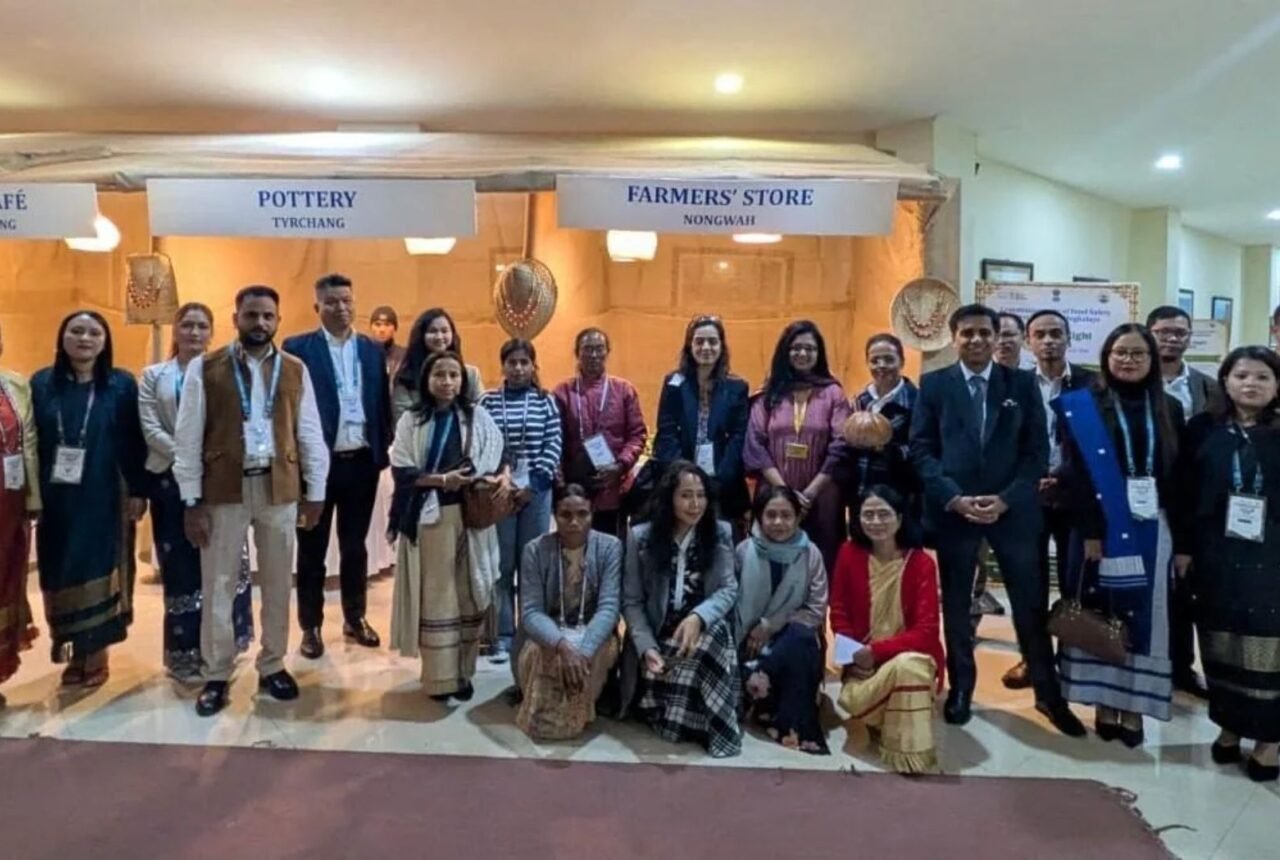
Three thematic workshops led by local Self-Help Groups (SHGs) and entrepreneurs showcased sustainable food practices, eco-friendly alternatives and waste management initiatives.
Meghalaya’s indigenous food heritage formed an important part of the discussions, with traditional foods and practices such as Red Khasi Rice, finger millet, bamboo tube cooking, hill honey, wild greens and perilla seeds highlighting the links between food diversity, local knowledge, biodiversity and sustainable living.
The summit also outlined a roadmap for expanding the Eat Sustainable initiative across states and Union Territories, with the aim of encouraging sustainable food systems through institutional efforts, community participation and responsible consumption.
The event was attended by Abhimanyu Singh, Regional Director, FSSAI Eastern Region, along with officials from FSSAI and the State Food Safety Department.
Through the initiative, FSSAI aims to move beyond awareness towards sustained behavioural change by encouraging citizens, institutions and food businesses to make informed and responsible food choices.